Resident Physician HonorHealth PM&R Program Scottsdale, Arizona
Disclosure(s):
Kian Bagheri, DO: No financial relationships to disclose
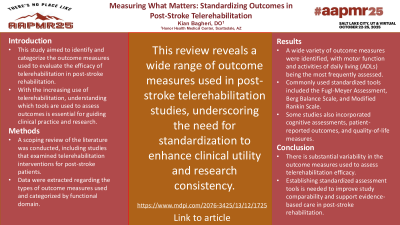
Background and/or Objectives: This study aimed to identify and categorize outcome measures used to assess the efficacy of telerehabilitation for post-stroke rehabilitation. Given the growing use of telerehabilitation, understanding the tools used to evaluate its effectiveness is crucial for guiding future clinical practice and research.
Interventions: Telerehabilitation interventions for post-stroke rehabilitation, including various remote therapy modalities.
Main Outcome Measures: Types of outcome measures used in telerehabilitation studies, categorized into domains such as motor function, activities of daily living (ADLs), quality of life, and cognitive function.
Results: Our review identified a diverse range of outcome measures, with motor function and ADLs being the most commonly assessed domains. Standardized tools such as the Fugl-Meyer Assessment, Berg Balance Scale, and Modified Rankin Scale were frequently used. Some studies also included patient-reported outcomes and quality-of-life measures.
Conclusions: Our study highlights the variability in outcome measures used for telerehabilitation efficacy assessment. Standardization of assessment tools is needed to enhance comparability across studies and improve evidence-based decision-making in post-stroke rehabilitation.

.jpg)