Akshat Patel, DO: No financial relationships to disclose
Case Diagnosis: 19-year-old male athlete was diagnosed with a Morel-Lavallée lesion (MLL), a closed degloving injury resulting from shearing forces.
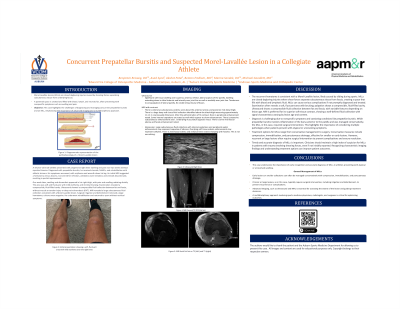
Case Description or Program Description: A 19-year-old male baseball athlete presented with progressive right knee swelling and pain over two weeks without reported trauma. Diagnosed with prepatellar bursitis, he received steroids, NSAIDs, and rehabilitation. His symptoms worsened with erythema down his leg. An initial MRI suggested a hematoma versus abscess. Concerned for infection, antibiotics were initiated while steroids were discontinued.
One week later, swelling and discomfort appeared in his right thigh, with the swelling radiating distally. Examination revealed a compressible, fluid-filled cavity that was soft and fluctuant. Ultrasound showed a compressible fluid collection between fat and fascia without any muscle or tendon injury or deep vein thrombosis. MRI revealed a large subcutaneous fluid collection consistent with a Morel-Lavallée lesion.
Setting: Auburn Sports Medicine
Assessment/Results: Surgical irrigation and debridement removed a large hematoma; cultures were negative. He underwent rehabilitation and returned to playing baseball without residual symptoms.
Discussion (relevance): The recurrent hematoma is consistent with a MLL, likely caused by sliding during sports. The shearing force separated subcutaneous tissue from fascia, creating a space that filled with blood and lymphatic fluid.
Diagnosis is challenging due to nonspecific symptoms and coexisting conditions like prepatellar bursitis. While prepatellar bursitis involves inflammation of the bursa anterior to the patella and was managed conservatively, the MLL, in this case, required surgical intervention. This highlights the importance of considering multiple pathologies when patients present with atypical symptoms.
Treatment options for MLLs range from conservative management (e.g. compression, immobilization, and percutaneous drainage) to surgery. Large lesions often require surgical intervention to ensure complete resolution.
Conclusions: Recognizing characteristic imaging findings and understanding treatment options can improve patient outcomes. Clinicians should maintain a high index of suspicion for MLLs in patients with trauma involving shearing forces, even if not initially reported.

.jpg)