Justin Pratte, DO: No financial relationships to disclose
Case Diagnosis: A 59 y/o male with history of traumatic brain injury and multifactorial peripheral polyneuropathy presented with worsening weakness in his left upper extremity found to have C8-T1 cervical radiculopathy secondary to C7-T1 osteomyelitis.
Case Description or Program Description: A 59 y/o male with history of traumatic brain injury, alcoholic cirrhosis, type 2 diabetes, psoriatic arthritis, and multifactorial peripheral polyneuropathy. Presented to the PM&R clinic with worsening weakness in his left upper extremity. He reported recent tooth infection and had myelopathic exam findings. He was at a long-term acute care hospital for TBI comprehensive rehabilitation prior to presentation to clinic.
Setting: Seen on the continuum of care from clinic to acute hospitalization to inpatient rehab back to clinic.
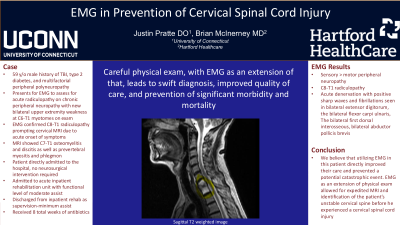
Assessment/Results: Physical Exam findings prompted an EMG that confirmed an acute C8-T1 cervical radiculopathy. MRI of the cervical spine was ordered, revealing C7-T1 osteomyelitis / discitis with likely extension to the first ribs bilaterally, probable myositis, and prevertebral phlegmon with small epidural fluid collection at C7. He was notified to report to the ED immediately. No acute neurosurgical intervention was recommended, he was treated conservatively with antibiotics and monitoring.
Discussion (relevance): Functional status prior to hospitalization was independent. He was admitted to acute inpatient rehabilitation for non-traumatic spinal cord dysfunction with functional status of moderate assist. After an 8-day acute rehab course his functional status improved to contact guard assist with mobility and supervision / minimum assist with ADLs/IADLs. His rehabilitation course allowed for education to increase patient safety and decrease risk of trauma to an unstable cervical spine.
Conclusions: We believe that utilizing EMG in this patient directly improved their care and prevented a potential catastrophic event. This was missed on prior evaluations secondary to his multiple confounding comorbidities. EMG as an extension of the physical exam allowed for expedited diagnosis of the patient’s unstable cervical spine and infection before catastrophic progression.

.jpg)