Medical Student Kamineni Academy of Medical Sciences and Research Center Chantilly, Virginia
Disclosure(s):
Ranadheer Danturthy, MBBS: No financial relationships to disclose
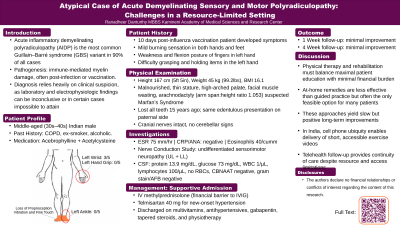
Case Diagnosis: Atypical presentation of acute demyelinating sensory and motor polyradiculopathy with resource limitation
Case Description or Program Description: A patient presented with burning sensations in hands and feet, left-hand weakness, and gait instability after a fever episode. He had received the influenza vaccine two weeks prior due to COPD. Examination revealed malnutrition, muscle wasting, and neurological deficits. Laboratory tests suggested inflammation, and a nerve conduction study confirmed sensorimotor neuropathy; no evidence of Guillan-Barre syndrome was identified. Due to financial constraints, he was treated with IV methylprednisolone, showing improvement by Day 2. On Day 2 he developed hypertension, managed with telmisartan. Upon discharge, he was prescribed multivitamins, antihypertensives, gabapentin, and a tapering dose of methylprednisolone.
Setting: Tertiary care hospital in Hyderabad, Telangana State India
Assessment/Results: Four weeks after completing methylprednisone, the patient returned with slight improvement. He continued physical therapy and medication, but showed minimal improvement at the next follow-up. He was lost to follow-up after the second visit.
Discussion (relevance): A patient was diagnosed with Acute Inflammatory Demyelinating Polyneuropathy (AIDP) after receiving the influenza vaccine. Diagnosis was challenging due to inconclusive test results. Treatment included IV steroids and physical therapy, but adherence was difficult due to the patient's socioeconomic background. Counseling and continuous therapy are crucial for recovery, which typically takes 2-3 months.
Conclusions: This case specifically illustrates the imperative that physical rehabilitation to maximize patient education while minimizing financial burdens. Simplified, at-home remedies may not be as effective as guided practices and repetition but remain the only method by which such patients can receive adequate care. These techniques show slow, but positive improvements in patients long term. Specific to the Indian population, is the ubiquity of cell phones so this patient can be instructed with easily digestible videos showing the appropriate exercises and follow-up can be described via telehealth.

.jpg)