Resident Physician Ohio State University Hospital PM&R Program Columbus, Ohio
Disclosure(s):
Troy Kotsch, MD: No financial relationships to disclose
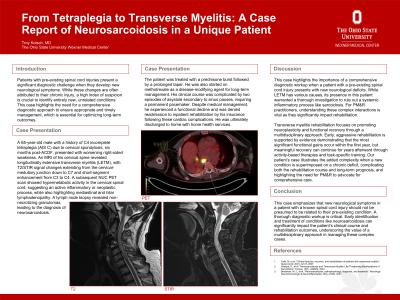
Case Diagnosis: This case describes a 65-year-old male with a history of incomplete cervical spinal cord injury who developed acute right-sided weakness, ultimately diagnosed with neurosarcoidosis presenting as longitudinally extensive transverse myelitis.
Case Description or Program Description: A 65-year-old male with a history of nontraumatic incomplete cervical spinal cord injury due to cervical spondylosis (C4 incomplete tetraplegia, AIS C) presented with a two-week history of worsening right-sided weakness. Six months prior, he had undergone anterior cervical discectomy and arthrodesis (C3-C4) and completed SCI rehabilitation.
Setting: Initial workup and treatment occurred in the acute care setting, followed by subsequent transfer for inpatient rehabilitation.
Assessment/Results: Neuroimaging showed longitudinally extensive transverse myelitis with enhancement. Autoimmune testing was positive for GAD65 antibodies. CT chest showed lymphadenopathy, and biopsy confirmed granulomas consistent with neurosarcoidosis.
Discussion (relevance): In patients with a history of spinal cord injury, new-onset neurological symptoms can complicate rehabilitation and recovery. The recognition of conditions such as neurosarcoidosis is important in the context of inpatient rehabilitation, as these disorders can affect both the clinical course and rehabilitation outcomes. Identifying the underlying cause of acute neurological deficits through thorough diagnostic workup, including advanced imaging and autoimmune testing, is essential in guiding treatment plans. For PM&R practitioners, understanding the impact of such conditions on functional outcomes is critical in developing individualized rehabilitation strategies that address both the underlying medical issues and the patient's recovery goals.
Conclusions: This case emphasizes the need for vigilance in evaluating new neurological deficits in patients with a history of spinal cord injury. The diagnosis of neurosarcoidosis through imaging and biopsy led to effective treatment, although the patient’s ongoing rehabilitation underscores the complexity of recovery in such multifactorial cases.

.jpg)