Assistant Professor University of Minnesota Eden Prairie, Minnesota
Disclosure(s):
Jenna Zarzaur: No financial relationships to disclose
Florence John, MD, MPH: No financial relationships to disclose
Case Diagnosis: Paraneoplastic Neuromyelitis Optica Spectrum Disorder
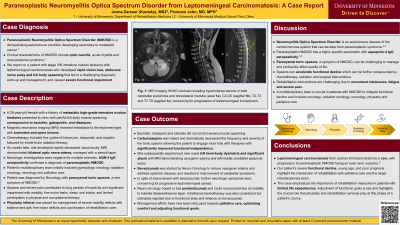
Case Description or Program Description: A twenty-eight year-old female underwent multiple outpatient evaluations for severe emesis and fatigue that were attributed to vertigo. Following hospital admission, she was diagnosed with metastatic high-grade immature ovarian teratoma. Magnetic resonance imaging (MRI) revealed leptomeningeal carcinomatosis with brainstem and spine lesions. She received five cycles of chemotherapy and whole-brain radiation. Six weeks later, she developed decreased visual acuity with muscle spasms. MRI demonstrated bilateral optic nerve edema concerning for paraneoplastic neuromyelitis optica spectrum disorder (NMOSD) which was managed with a steroid taper. She presented with severe full-body muscle spasming not responsive to baclofen, gabapentin, and diazepam. Spasms caused significant impairment with mobility, fine motor tasks, sleep, oral intake, and participation in physical and occupational therapy.
Setting: Cancer Rehabilitation Clinic
Assessment/Results: Evaluation revealed generalized muscle spasms interfering with her ability to complete basic activities of daily living. Symptoms resulted in long periods of inactivity as she preferred to remain in a supine position. Rehabilitation approach included increasing baclofen dose, optimizing therapy interventions, nutritional support and addressing equipment needs. Paroxysmal tonic spasms were diagnosed by Neurology and treated with carbamazepine, drastically improving her symptoms, activity level, and ability to engage with therapies.
Discussion (relevance): Paraneoplastic NMOSD is an autoimmune condition that develops secondary to metastatic cancer. Paroxysmal tonic spasms, a symptom of paraneoplastic NMOSD, can profoundly affect a patient’s quality of life. This accelerates functional loss and is compounded by cancer treatments. Effective symptom control with a multidisciplinary rehabilitation approach is crucial in improving quality of life.
Conclusions: Leptomeningeal carcinomatosis from ovarian immature teratoma is rare, with progression to paraneoplastic NMOSD even rarer. Our patient’s severe functional decline, age, and poor prognosis highlight the intersection of rehabilitation with palliative care and the larger interdisciplinary team. This case emphasizes the importance that rehabilitation measures play in patients with a limited life expectancy.

.jpg)