Resident JFK Medical Center PM&R Program Edison, New Jersey
Disclosure(s):
Teja Makkapati, MD: No financial relationships to disclose
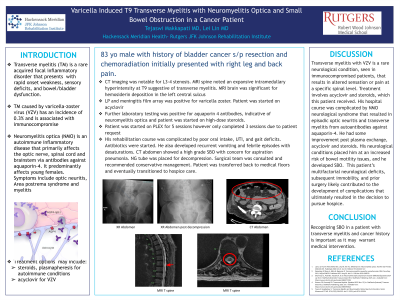
Case Diagnosis: 83-year-old male with varicella zoster transverse myelitis and neuromyelitis optica after radiation for bladder cancer that was complicated by small bowel obstruction
Case Description or Program Description: 83-year-old male with medical history significant for bladder cancer post tumor resection and chemoradiation presented with leg and back pain after a recent radiation treatment. He was found to have T9 transverse myelitis and underwent a lumbar puncture. Meningitis film array was positive for varicella zoster and he was started on acyclovir and high dose steroids. Further testing revealed neuromyelitis optica and he underwent partial plasmapheresis and transferred to IRF. The rehabilitation course was complicated by management of electrolyte abnormalities, poor oral intake and gait deficits.
Setting: inpatient acute rehabilitation hospital
Assessment/Results: The patient made gains in therapy however, the rehabilitation course was complicated by worsening gastrointestinal symptoms, oxygen desaturation, and tachycardia. Imaging confirmed small bowel obstruction (SBO), and a nasogastric tube was placed. There was also concern for aspiration pneumonia, and broad spectrum antibiotics were started. Surgery recommended conservative management and due to deteriorating conditions, patient and family opted for inpatient hospice.
Discussion (relevance): Transverse myelitis with varicella zoster virus (VZV) is a rare neurological condition, often seen in immunocompromised patients, that results in altered sensation or pain at a specific spinal level. Treatment involves acyclovir and steroids, which this patient received. Neuromyelitis optica (NMO) is neurological syndrome that results in episodic optic neuritis and transverse myelitis from autoantibodies against aquaporin 4. Treatment includes plasma exchange and steroids. This patient’s multifactorial neurological deficits, subsequent immobility, and prior surgery likely contributed to the development of complications that ultimately resulted in the decision to pursue hospice. Continued medical monitoring, accurate diagnosis, and prompt treatment continue to be important for patients in IRF
Conclusions: We describe a unique case of transverse myelitis complicated by neuromyelitis optica and SBO in a patient post radiation.

.jpg)