Resident Physician University of Utah PM&R Program Salt Lake City, Utah
Disclosure(s):
Arianna Lanpher, DO: No financial relationships to disclose
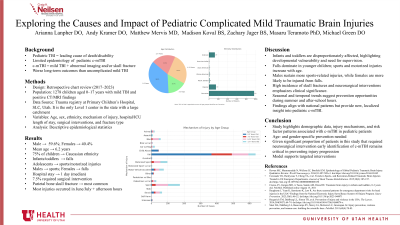
Background and/or Objectives: Traumatic brain injury (TBI) is a leading cause of morbidity and mortality in children, with mild TBI (mTBI) accounting for approximately 80% of cases. Among these, complicated mTBI (c-mTBI) is characterized by radiographic evidence of intracranial abnormalities and/or skull fractures. Understanding the etiology and epidemiological trends of c-mTBI in the pediatric population is crucial for prevention and management strategies. This study is important as it aims to fill gaps in current knowledge, potentially leading to improved clinical outcomes and targeted interventions.
Design: Single-site retrospective cohort study.
Setting : Level 1 Pediatric Trauma Center.
Participants : 1278 pediatric patients diagnosed with c-mTBI who were admitted to the hospital between September 2017 and September 2023.
Interventions: NA
Main Outcome Measures: Assessment of etiology and epidemiological trends of c-mTBI cases in children.
Results: Age & Gender Distribution: Predominantly males; highest incidence in children < 3 years old. Mechanism of Injury (MOI): 0–2 years: Falls as primary cause. 3–5 years: Falls remain dominant, with an increasing incidence of sports-related injuries. 6–12 years: Falls and sports-related injuries, including motor sport injuries. 13+ years: Sports-related injuries, falls, and motor vehicle accidents. Length of Stay (LOS): Mean 2.4 days; ICU stay averaged 1.5 days. Injury Patterns: 78% of cases involved skull fractures. 8.5% required neurosurgical intervention. Temporal Trends: Higher incidence during summer months and evening hours.
Conclusions: Pediatric c-mTBI predominantly affects males and younger children, with falls as the leading cause in most age groups. As children age, sports-related injuries become more prevalent, with motor vehicle accidents contributing in adolescence. Skull fractures are a common finding, and a subset of cases require neurosurgical intervention. Seasonal and temporal patterns suggest targeted prevention strategies may reduce injury burden.

.jpg)