Physician Baylor Scott and white. Flower Mound, Texas
Disclosure(s):
Chinedu B. Nweke, MD: No financial relationships to disclose
Case Diagnosis: Intrathecal Baclofen Withdrawal
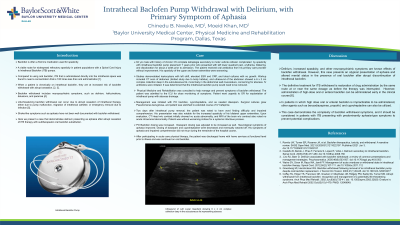
Case Description or Program Description: A 62 y/o male chronic C5 complete tetraplegia secondary to motor vehicle collision with an intrathecal baclofen pump (ITB) placement presented with left lower quadrant pain, erythema, blistering, and discoloration for about a week prior to admission. Workup showed a 6 x 2 cm complex collection deep in the subcutaneous fat, more likely in the abdominal wall musculature, concerning for abscess. IV antibiotics were initiated. It was determined that the intrathecal baclofen pump would need to be removed. Oral baclofen, cyproheptadine, and as needed diazepam were initiated after removal. Two days after intrathecal baclofen pump removal, the patient was noted to have word finding difficulty and impaired comprehension. His presentation was also notable for the increased spasticity of his bilateral upper extremities. CT Head w/o contrast and MRI of the brain w/o contrast showed no acute abnormality. Baclofen and Diazepam were increased.
Setting: Inpatient Academic Medical Center
Assessment/Results: Neurological symptoms of aphasia improved. Dosing of diazepam and cyproheptadine were decreased and eventually weaned off. His symptoms of aphasia and impaired comprehension did not recur during the remainder of the hospital course, and after participating in acute care physical therapy, the patient was discharged home with home services at functional level prior to illness and was continued on oral baclofen.
Discussion (relevance): This case highlights the complexity of the signs of baclofen withdrawal, and consideration for this diagnosis in the setting of new onset aphasia in an ITB patient is crucial to avoid potential complications.
Conclusions: More research and awareness of aphasia with ITB withdrawal is important for acute management of patients with ITB therapy.

.jpg)