Samuel Glaisher, MD: No financial relationships to disclose
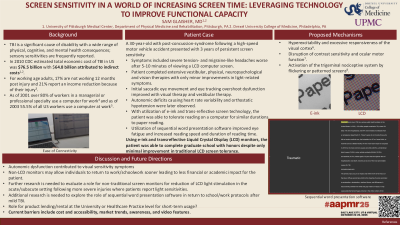
Case Diagnosis: A 30-year-old with post-concussion-syndrome following a mild traumatic brain injury (mTBI) presented with persistent screen sensitivity and had improved functionality with the use of an e-ink monitor and sequential word presentation software.
Case Description or Program Description: The patient suffered a mTBI after a motor vehicle accident 3 years prior. He reported persistent headaches exacerbated with electronic screen use despite vision, vestibular and physical therapy improving his initial deficits. This deficit was not improved despite gradual desensitization therapy. This made virtual learning during the pandemic difficult. With use of e-ink monitor and sequential word presentation (SWP) software the patient was able to complete his education, earning a professional degree.
Setting: The case occurred in the outpatient setting.
Assessment/Results: The patient had onset of headaches after a short period of looking at a computer monitor despite extensive attempts at gradual desensitization. Upon switching to an e-ink monitor, his tolerance improved by over 400%. When paired with sequential word presentation his reading tolerance improved an additional 25%.
Discussion (relevance): The cost of disability on work production following traumatic brain injury (TBI) is substantial. If utilization of an e-ink screen or related technology can improve the duration a patient can interact with information, this could cut down both financial and quality of life costs following TBI. SWP has been shown to be beneficial as a reading aid in several conditions. Given that many patients suffer from eye dysfunction after both mild and severe TBIs, SWP may reduce the level of disability when interacting with reading material.
Conclusions: Although it may not improve the underlying deficit, utilizing e-ink or other adaptive technologies, like sequential word presentation software, allows patients to return to activities of daily living that require computer screens with less symptom exacerbation. This will help reduce the ramifications of patients’ injuries and improve quality of life and wellbeing.

.jpg)