Sergey Borodianski, MD: No financial relationships to disclose
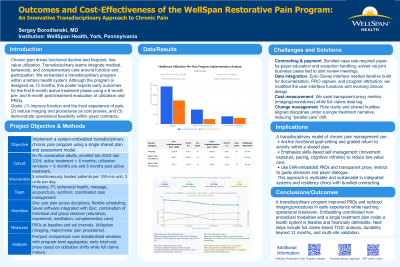
Background and/or Objectives: The WellSpan Restorative Pain Program (RPP) is a novel transdisciplinary initiative aimed at improving chronic pain management. This study evaluates clinical outcomes, cost-effectiveness, and healthcare utilization among patients enrolled in the RPP.
Design: A retrospective, single-arm analysis was conducted evaluating outcomes before and after participation in the RPP.
Setting : The program was implemented within a large integrated healthcare system’s outpatient chronic pain management clinic.
Participants : Adult patients with chronic nonmalignant pain of at least six months duration were included. Enrollment followed established referral criteria for transdisciplinary management, ensuring a representative sample of the chronic pain population.
Interventions: The RPP is a 12-month, phase-based program with a structured treatment schedule. The initial phase consisted of four visits in one month, followed by three visits per month for two months, two visits per month for three months, and a final phase of one visit per month for six months. The program integrates physical therapy, behavioral health, massage, acupuncture, and nutritional support, all coordinated under the guidance of a physician lead.
Main Outcome Measures: Primary measures included changes in pain intensity, functional status, and quality of life as assessed by validated scales. Secondary measures evaluated healthcare utilization metrics, including high-cost imaging studies, and interventional pain procedures.
Results: Preliminary findings indicate that patients in the RPP experienced significant reductions in pain intensity and improvements in functional outcomes following program participation. Additionally, there was a notable decrease in high-cost imaging studies and interventional pain procedures, suggesting potential cost savings associated with the transdisciplinary approach.
Conclusions: The WellSpan RPP demonstrates promising clinical and economic benefits for chronic pain management. These results support the potential for broader implementation of transdisciplinary programs to optimize patient outcomes and resource utilization.

.jpg)