Physician Memorial Healthcare System Hollywood, Florida
Disclosure(s):
Emma Adkins, MD: No financial relationships to disclose
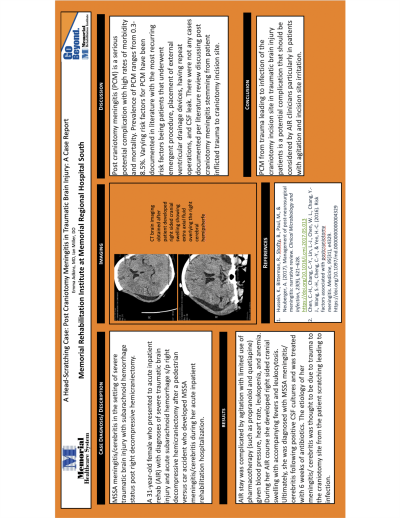
Case Diagnosis: MSSA meningitis/cerebritis in the setting of severe traumatic brain injury with subarachnoid hemorrhage status post right decompressive hemicraniectomy.
Case Description or Program Description: 31-year-old female who presented to acute inpatient rehab (AIR) with diagnoses of severe traumatic brain injury and acute subarachnoid hemorrhage s/p right decompressive hemicraniectomy after a pedestrian versus car accident who developed MSSA meningitis/cerebritis during her acute inpatient rehabilitation hospitalization.
Setting: Acute inpatient rehabilitation.
Assessment/Results: AIR stay was complicated by agitation with limited use of pharmacotherapy (such as propranolol and quetiapine) given blood pressure, heart rate, leukopenia, and anemia. During her AIR course she developed right sided cranial swelling with accompanying fevers and leukocytosis. Ultimately, she was diagnosed with MSSA meningitis/ cerebritis following positive CSF cultures and was treated with 6 weeks of antibiotics. The etiology of her meningitis/ cerebritis was thought to be due to trauma to the craniotomy site from the patient scratching leading to infection.
Discussion (relevance): Post craniotomy meningitis (PCM) is a serious potential complication with high rates of morbidity and mortality. Prevalence of PCM ranges from 0.3-8.5%. Varying risk factors for PCM have been documented in literature with the most recurring risk factors being patients that underwent emergent procedure, placement of external ventricular drainage devices, having repeat operations, and CSF leak. There were not any cases documented per literature review discussing post craniotomy meningitis stemming from patient inflicted trauma to craniotomy incision site.
Conclusions: PCM from trauma leading to infection of the craniotomy incision site in traumatic brain injury patients is a potential complication that should be considered by AIR clinicians particularly in patients with agitation and incision site irritation.

.jpg)