Clinical Research Coordinator (Non-RN) Rady Children's Hospital-San Diego San Diego, California
Disclosure(s):
Pritha Dalal, MD: No financial relationships to disclose
Anna Burch, Other: No financial relationships to disclose
Background and/or Objectives: Individuals with chronic pain may experience decreased physical functioning and worsening mental health symptoms. The purpose of this study was to assess changes in physical functioning, anxiety symptoms, and depressive symptoms following therapeutic services with a pain psychologist via an outpatient pain program.
Design: A chart review was conducted for patients seen by a pain psychologist at least three times and had their pre- and post- appointments within three months of each other.
Setting : Outpatient clinic setting
Participants : 76 patients between the ages of 6 and 20 years old (Mage = 14.71 ± 2.71; 58 female, 12 male, 6 gender diverse) and their caregivers
Interventions: Psychology visits with a pain psychologist including pain education, coping skills and cognitive behavioral therapy.
Main Outcome Measures: Patients completed measures related to their physical functioning (Functional Disability Inventory; FDI), anxiety symptoms (Generalized Anxiety Disorder Scale; GAD-7), and depressive symptoms (Patient Health Questionnaire; PHQ-9).
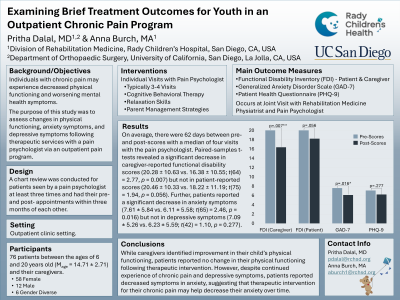
Results: On average, there were 62 days between pre-and post-scores with a median of four visits with the pain psychologist. Paired-samples t-tests revealed a significant decrease in caregiver-reported functional disability scores (20.28 ± 10.63 vs. 16.38 ± 10.55; t(64) = 2.77, p = 0.007) but not in patient-reported scores (20.46 ± 10.33 vs. 18.22 ± 11.19; t(75) = 1.94, p = 0.056). Further, patients reported a significant decrease in anxiety symptoms (7.61 ± 5.84 vs. 6.11 ± 5.58; t(65) = 2.46, p = 0.016) but not in depressive symptoms (7.09 ± 5.26 vs. 6.23 ± 5.59; t(42) = 1.10, p = 0.277).
Conclusions: While caregivers identified improvement in their child’s physical functioning, patients reported no change in their physical functioning following therapeutic intervention. However, despite continued experience of chronic pain and depressive symptoms, patients reported decreased symptoms in anxiety, suggesting that therapeutic intervention for their chronic pain may help decrease their anxiety over time.

.jpg)