Assoc. Program Director University of Toledo PM&R Program Monclova, Ohio
Disclosure(s):
Cale Melham, MD: No financial relationships to disclose
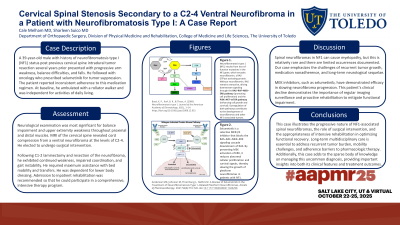
Case Diagnosis: Cervical Spinal Stenosis Secondary to a C2-4 Ventral Neurofibroma
Case Description or Program Description: A 39-year-old male with history of neurofibromatosis type I (NF1) status post previous cervical spine intradural tumor resection several years prior presented with progressive arm weakness, balance difficulties, and falls. He followed with oncology who prescribed selumetinib for tumor suppression. The patient reported inconsistent adherence to this medication regimen. At baseline, he ambulated with a rollator walker and was independent for activities of daily living.
Setting: Academic Medical Center
Assessment/Results: Neurological examination was most significant for balance impairment and upper extremity weakness throughout proximal and distal muscles. MRI of the cervical spine revealed cord compression from a ventral neurofibroma at the levels of C2-4. He elected to undergo surgical intervention.
Following C1-2 laminectomy and resection of the neurofibroma, he exhibited continued weakness, impaired coordination, and gait instability. He required maximum assistance with bed mobility and transfers. He was dependent for lower body dressing. Admission to inpatient rehabilitation was recommended so that he could participate in a comprehensive, intensive therapy program.
Discussion (relevance): Spinal neurofibromas in NF1 can cause symptomatic myelopathy, but this is relatively rare and there are limited occurrences documented. Our case emphasizes the challenges of recurrent tumor growth, medication nonadherence, and long-term neurological sequelae.
MEK inhibitors, such as selumetinib, have demonstrated efficacy in slowing neurofibroma progression. This patient’s clinical decline demonstrates the importance of regular imaging surveillance and proactive rehabilitation to mitigate functional impairment.
Conclusions: This case illustrates the progressive nature of NF1-associated spinal neurofibromas, the role of surgical intervention, and the appropriateness of intensive rehabilitation in optimizing functional recovery. Long-term multidisciplinary care is essential to address recurrent tumor burden, mobility challenges, and adherence barriers to pharmacologic therapy. Additionally, this case adds to the sparse body of knowledge on managing this uncommon diagnosis, providing important insights into both its clinical features and treatment outcomes.

.jpg)