Resident Physician McGaw Medical Center of Northwestern University (SRAL) PM&R Program Chicago, Illinois
Disclosure(s):
Joseph Monat, DO: No financial relationships to disclose
Case Diagnosis: A patient with a traumatic brain injury presented with abdominal pain near his gastric tube site, which was caused by the internal balloon of his gastric tube becoming embedded in his abdominal wall.
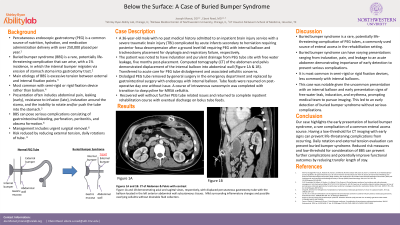
Case Description or Program Description: A 36-year-old male presented to acute inpatient rehabilitation (AIR) with a severe traumatic brain injury after a ground level fall. He had a prolonged hospital course that was complicated by impaired arousal and severe dysphagia requiring placement of a percutaneous endoscopic gastrostomy tube (PEG). Later in his hospital stay he was developed erythema and induration near the PEG incisional site and there was concern for leakage of tube flushes and purulent drainage. A CT Abdomen/Pelvis was completed and revealed a displaced percutaneous gastrostomy tube with the balloon located at the junction of the subcutaneous fat and muscle of the left anterior abdominal wall.
Assessment/Results: The presence of a buried bumper required transfer to the emergency room for removal his PEG tube and placement of new tube given his persistent dysphagia. Urgent bedside tube replacement by general surgery was unsuccessful, this patient required placement of a new PEG tube at a different site under anesthesia with Interventional Radiology. His cellulitis resolved with antibiotics and the "induration" was discovered to be the balloon abutting the skin rather than true induration of the skin.
Discussion (relevance): PEG complication rate is around 0.4 to 22.5% including a serious potential complication of buried bumper syndrome where the internal PEG bumper migrates out of the stomach. The incidence of buried bumper syndrome (BBS) is around 1% and its complications include malnutrition, peritonitis, abscess formation, and necrosis.
Conclusions: Many inpatient rehabilitation patients have gastrostomy tubes, therefore it is important that healthcare providers are informed on potential complications of gastrostomy tubes. Early detection of buried bumper syndrome is essential to prevent potentially life-threatening complications.

.jpg)