Resident Physician HonorHealth PM&R Program Scottsdale, Arizona
Disclosure(s):
Kian Bagheri, DO: No financial relationships to disclose
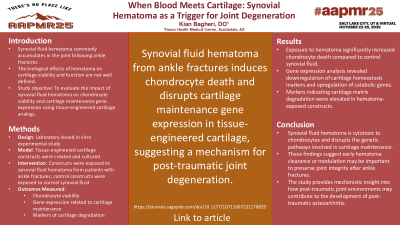
Background and/or Objectives: The study aimed to investigate how exposure to synovial fluid hematoma, which forms after ankle fractures, affects tissue-engineered cartilage. Specifically, it examined the impact on chondrocyte viability and cartilage maintenance gene expression, with implications for post-traumatic rehabilitation and joint health preservation.
Design: Laboratory-based experimental study.
Setting : In vitro study using tissue-engineered cartilage analogs.
Participants : N/A (Utilized tissue-engineered cartilage models rather than human participants).
Interventions: Cartilage analogs were exposed to synovial fluid hematoma collected from patients with ankle fractures. The effects were compared to exposure to control synovial fluid.
Main Outcome Measures: Chondrocyte viability, gene expression related to cartilage maintenance, and markers of cartilage degradation.
Results: Exposure to synovial fluid hematoma led to increased chondrocyte death and altered gene expression associated with cartilage maintenance. These findings suggest that post-traumatic hematoma may contribute to cartilage damage, potentially delaying rehabilitation and increasing the risk of post-traumatic osteoarthritis.
Conclusions: The study highlights the detrimental effects of synovial fluid hematoma on cartilage health, emphasizing the need for early intervention strategies in rehabilitation to mitigate joint damage following ankle fractures. Understanding these mechanisms could help improve post-injury recovery protocols and long-term joint function.

.jpg)