Resident Physician Cleveland Clinic Foundation PM&R Program Cleveland, Ohio
Disclosure(s):
Jeffrey Hsia, MD: No financial relationships to disclose
Case Diagnosis: A 30 year-old male with bevacizumab-induced coagulative necrosis of the brain.
Case Description or Program Description: Patient with past medical history of subtotal resection of right frontal astrocytoma presented with 1 month of worsening fatigue, left-sided weakness, nausea, vomiting, and painful mouth sores. Patient also endorsed increased frequency of falls, headaches, and difficulty ambulating.
Setting: Acute Hospital
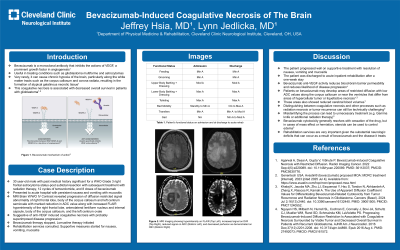
Assessment/Results: EGD with biopsy showed no evidence of gastric process or H. Pylori. MRI W/WO contrast showed progressive diffusion restriction abnormality in the right frontal lobe, body of the corpus callosum and left centrum ovale with marked and well-demarcated reduction in ADC value concerning for disease progression and possible atypical gelatinous necrosis. Bevacizumab was replaced with lomustine and the patient was placed on a dexamethasone taper. He received supportive care for his mucositis, nausea, and vomiting and was scheduled for repeat MRI outpatient. The patient progressed well with therapy and was ultimately deemed appropriate for discharge to acute inpatient rehabilitation.
Discussion (relevance): Bevacizumab is a monoclonal antibody that inhibits the actions of VEGF, a prominent growth factor in angiogenesis. This drug can be used to treat conditions such as glioblastoma multiforme and astrocytomas. However, bevacizumab can rarely cause chronic hypoxia in the brain that leads to the formation of atypical gelatinous necrotic tissue, particularly along white matter tracts such as the corpus callosum and corona radiata. These changes can be subtle and difficult to differentiate from radiation necrosis and tumor recurrence on traditional MRI, making diagnosis and thus adjustment in treatment plan difficult.
Conclusions: Coagulative necrosis of the brain is a rare complication of bevacizumab treatment. While prognosis remains guarded, this case demonstrates the need for rehabilitation services in those affected.

.jpg)