Associate Professor Loyola University Medical Center Oak Brook, Illinois
Disclosure(s):
Michael Von Borstel, DO: No financial relationships to disclose
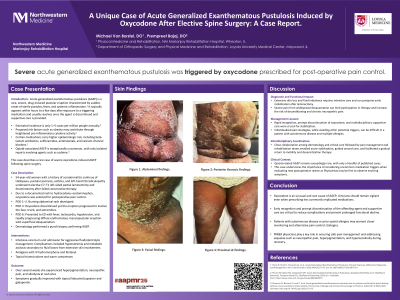
Case Diagnosis: Severe acute generalized exanthematous pustulosis (AGEP) as an allergic response to oxycodone administered for pain control after elective surgery.
Case Description or Program Description: 54-year-old female with a history of acrodermatitis continua of Hallopeau, pustular psoriasis, drug eruptions, asthma, and left-hand pain/numbness with EMG findings of C8 radiculopathy. After failing conservative management, she underwent elective C7-T1 left-sided partial laminectomy and foraminotomy. Due to a known allergy to hydrocodone-acetaminophen (rash), she was discharged with oxycodone for severe breakthrough pain. Shortly after discharge, she developed a burning rash on her abdomen. She discontinued oxycodone on postoperative day (POD) 3, but her rash progressed, prompting ED presentation on POD6. She was febrile, hypotensive, tachycardic, and had a diffuse erythematous maculopustular rash with superficial desquamation involving her face, trunk, and extremities requiring burn unit ICU admission. Dermatology performed a punch biopsy, confirming the diagnosis of AGEP.
Setting: Acute care.
Assessment/Results: Treatment included topical triamcinolone, warm compresses, and hydromorphone/fentanyl for pain control. Course was complicated by hyponatremia and metabolic acidosis due to fluid loss from desquamation. At follow-ups, she experienced hyperpigmentation, neuropathic pain, and allodynia at the rash sites which gradually improved with topical lidocaine, capsaicin cream, and gabapentin.
Discussion (relevance): AGEP is a rare, severe drug reaction characterized by fever and rapid pustule development within hours to days. The desquamation increases the risk for significant secondary complications. While our patient had a history of multiple autoimmune conditions and allergic reactions, she did not have previous skin reactions to oxycodone. Common triggers of AGEP include antibiotics, antimalarials, and calcium channel blockers, with very limited reports linking opiates to AGEP.
Conclusions: This case report describes a unique instance of severe AGEP triggered by oxycodone, which was used for post-operative pain management. This highlights the importance of close monitoring and careful selection of pain medications in patients with a history of autoimmune conditions and prior opioid allergies.

.jpg)