Claire Becker, DO: No financial relationships to disclose
Anna Rozman, DO, MBA: No financial relationships to disclose
Case Diagnosis: Sudden extremity weakness during a bicycle race resulting in an intraparenchymal hemorrhage caused by a cerebral cavernoma
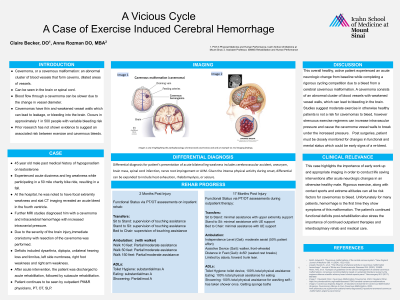
Case Description or Program Description: Our patient is a 45 year old male with a past medical history of hypogonadism who experienced leg weakness due to an undiagnosed cavernoma while he was participating in a 50-mile bike ride. During the race, the patient began to feel dizzy with weakness in his legs resulting in a fall. Stat CT imaging revealed a bleed in the fourth ventricle. MRI studies diagnosed him with a cavernoma and intracerebral hemorrhage with increased intracranial pressure. Due to the severity of the injury, he underwent a craniotomy with cavernoma resection. Patient was discharged to acute rehabilitation to improve his deficits including dysarthria, diplopia, unilateral hearing loss, tinnitus, left side numbness, right foot weakness and right arm weakness.
Setting: Inpatient rehabilitation and follow up in outpatient sports medicine clinic
Assessment/Results: This overall healthy, active patient experienced an acute neurologic change from baseline while completing a rigorous cycling competition due to a bleed from a cerebral cavernous malformation.
Discussion (relevance): A cavernoma consists of an abnormal cluster of blood vessels with weakened vessel walls, which can lead to bleeding in the brain. Studies suggest moderate exercise in otherwise healthy patients is not a risk for cavernomas to bleed, however strenuous exercise regimens can increase intravascular pressure and cause the cavernoma vessel walls to break under the increased pressure.
Conclusions: This case highlights the importance of early work up and appropriate imaging in order to conduct life saving interventions after acute neurologic changes in an otherwise healthy male. Rigorous exercise can be a risk factor for cavernomas to bleed. Unfortunately for many patients, hemorrhage is the first symptom of this malformation. The patient’s continued functional deficits post-rehabilitation also stress the importance of continued outpatient therapies and interdisciplinary rehab and medical care.

.jpg)