Vice Chair University of Kentucky Lexington, Kentucky
Disclosure(s):
Rachel Anderson, MD: No financial relationships to disclose
Case Diagnosis: Anterior spinal cord infarction in a 54-year-old female presenting with sudden paraplegia, initially diagnosed with acute inflammatory demyelinating polyneuropathy (AIDP).
Case Description or Program Description: A previously healthy 54-year-old female drove to Florida for vacation. The morning after arrival, the patient developed progressive bilateral leg cramping and sudden paraplegia. She was evaluated at an outside community hospital, where she was suspected to have AIDP. She was transferred to an inpatient rehabilitation facility, where the diagnostic picture became increasingly complex.
Setting: She was hospitalized for one week at the community hospital, undergoing extensive testing, including spine and brain MRI, lumbar puncture, and autoimmune and viral panels, all of which were unrevealing. She received IVIG and steroids for presumed AIDP. After stabilization, she completed three weeks of inpatient rehabilitation, where the patient was noted to have lower extremity spasticity, raising doubts about the initial diagnosis
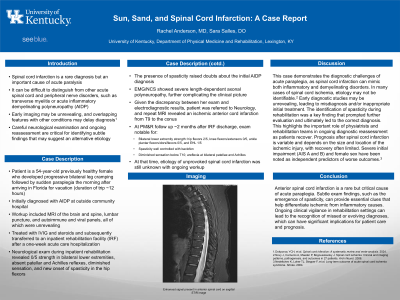
Assessment/Results: Neurological exam revealed 0/5 strength in bilateral lower extremities, absent patellar and Achilles reflexes, diminished sensation, and spasticity in hip flexors. While the initial workup was unrevealing, the presence of spasticity and complex diagnostic picture prompted further workup. EMG/NCS demonstrated severe, length-dependent, axonal polyneuropathy—further challenging the initial AIDP diagnosis. Given these discrepancies, the patient was referred to Neurology, prompting repeat MRI and revealing ischemic anterior cord syndrome from T9 to conus.
Discussion (relevance): Spinal cord infarction is a rare but critical cause of acute paralysis. This case underscores the importance of reassessing evolving clinical findings. The presence of spasticity was a key finding that led to reconsideration of the diagnosis, prompting further imaging that ultimately confirmed ischemic myelopathy.
Conclusions: This case highlights the diagnostic challenges of spinal cord infarction and the importance of subtle exam findings in distinguishing ischemic from inflammatory causes of acute paralysis. Early recognition is critical, but prognosis varies based on the extent of ischemic injury.

.jpg)