A Study of Functional Impact of Percutaneous Lumbar Decompression (MILD Procedure) in Symptomatic Severe Lumbar Stenosis Across Spectrum of Age and Disease Severity
Associate Professor in PM&R University of Miami Miami, Florida
Disclosure(s):
Seyed Ali Mostoufi, MD: No financial relationships to disclose
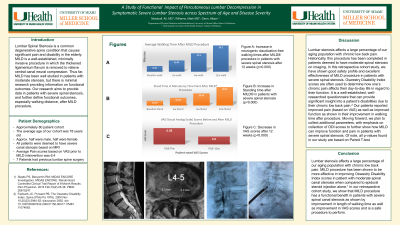
Background and/or Objectives: Lumbar spinal stenosis with neurogenic claudication is a major source of pain and impairment in aging population. MILD procedure has emerged as a viable solution for mild to moderate spinal stenosis. To date there is no study to evaluate safety and indications in patients with severe spinal stenosis particularly in age 85 and older
Design: Outcome measures such as ODI, Zurich claudication questionnaire, VAS, walking and standing tolerance at 2 weeks, 6 weeks and 12 weeks measured as compared to baseline. Secondary data on complication rate, progression to surgery was collected
Setting : retrospective study at academically affiliated ASC
Participants : 300 region treated with MILD procedure between 2020 and 2024, 81 patients met the inclusion criteria for our study
Interventions: Minimally Invasive Lumbar Decompression (MILD) is a percutaneous procedure targeting central lumbar stenosis caused by ligamentum flavum hypertrophy.
Main Outcome Measures: The primary endpoint of this study was patient-reported functional gains in terms of continuous standing tolerance in minutes, unassisted continuous walking tolerance time in minutes at 2 weeks, 6 weeks and 12 weeks follow-up appointment and comparing that to the baseline function.
Results: Statistical analysis demonstrated significant improvement (p value) in walking tolerance, standing tolerance, neurogenic claudication pain in a cohort of patients with severe spinal stenosis treated with MILD procedure. Additional data were extrapolated such as safety and efficacy of this procedure in patients 85 years or above with comorbidities. Results were favorable in this age group
Conclusions: The MILD procedure provides statistically and clinically significant improvements in walking tolerance, standing duration, and neurogenic claudication pain in patients with severe lumbar stenosis. These findings reinforce its value as a minimally invasive, safe, and effective treatment option—particularly in elderly and medically complex patients who have failed conservative care and are poor candidates for open decompression.

.jpg)