Roberto Andrade, MD: No financial relationships to disclose
Case Diagnosis: A 15-year-old male with a two-week history of bilateral knee pain concerning for bilateral tibia stress fracture
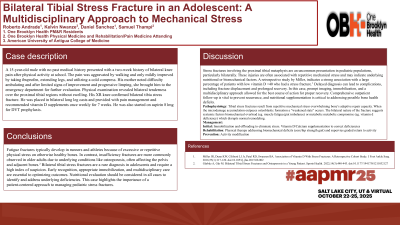
Case Description or Program Description: A 15-year-old male with no past medical history presented with a two-week history of bilateral knee pain after physical activity at school. The pain was aggravated by walking and only mildly improved by taking ibuprofen, extending legs, and utilizing a cold compress. His mother noted difficulty ambulating, and after limited signs of improvement and progressive limping, she brought him to the emergency department for further evaluation. Physical examination revealed bilateral tenderness over the proximal tibial regions without swelling.
Setting: Hospital/Emergency Department
Assessment/Results: Initial imaging showed abnormal sclerosis in the proximal tibial metaphysis, consistent with bilateral stress fractures. Nutritional labs (vitamin D, calcium, thyroid panel, and albumin) were ordered to identify potential underlying contributors. These injuries are often associated with repetitive mechanical stress and may indicate underlying nutritional or biomechanical factors, such as a low Vitamin D level of 15 ng/mL, as identified in this case. Bilateral long leg casts were applied to immobilize the affected extremities. The patient was also started on a high-dose vitamin D regimen, ibuprofen for pain management, and aspirin for DVT prophylaxis.
Discussion (relevance): Stress fractures involving the proximal tibial metaphysis are an uncommon presentation in pediatric populations, particularly bilaterally. A retrospective study by Miller indicates a strong association with a large percentage of patients with low vitamin D < 40 who had a stress fracture. Delayed diagnosis can lead to complications, including fracture displacement and prolonged recovery. In this case, prompt imaging, immobilization, and a multidisciplinary approach allowed for the best course of action for proper recovery.
Conclusions: Bilateral tibial stress fractures are a rare diagnosis in adolescents and require a high index of suspicion. Early recognition, appropriate immobilization, and multidisciplinary care are essential to optimizing outcomes.

.jpg)