Physical therapist Asst/Research Assistant KennedyKrieger Institute Baltimore, Maryland
Disclosure(s):
Albert Recio, MD, PT: No financial relationships to disclose
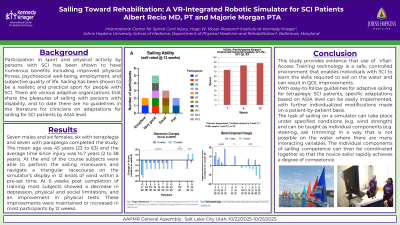
Background and/or Objectives: Participation in sport and physical activity by persons with SCI has been shown to have numerous benefits including improved physical fitness, psychosocial well-being, employment, and subjective quality of life. Sailing has been shown to be a realistic and practical sport for people with SCI. There are various adaptive organizations that share the pleasures of sailing with persons with disability, and to date there are no guidelines in the literature for clinicians on adaptations for sailing for SCI patients by ASIA level. The aim of this research is to investigate whether use of real time virtual sailing simulators can teach people with SCI to sail in a controlled environment and transition to sail safely and competently on the water. In addition, this study was designed to evaluate the effects on physical and psychological health..
Design: Prospective cohort conducted with IRB approval.
Setting : Outpatient academic institution
Participants : 20 participants with chronic SCI (> 6 months) with SCI levels (C1-S1)
Interventions: Subjects engaged in 12 week therapeutic sailing program using the VSail-Access sailing simulation system
Main Outcome Measures: Quality of Life, Functional Reach, Grasp, Pinch, and AIS test
Results: Seven males and six females, six tetraplegia and seven paraplegia with mean age 45 years (23 to 63) and average time since injury 14.7 years. Subjects were able to perform the sailing maneuvers and navigate a triangular racecourse on the simulator’s display in 12 knots of wind. At 6 weeks post completion subjects showed decrease in depression, physical and social limitations and improvement in physical tests. These improvements were maintained or increased by 12 weeks.
Conclusions: This study provides evidence that the use of Virtual Sailing technology is effective in teaching the skills required for on-water sailing. The study also provides evidence that this approach to rehabilitation provides evidence for improvements in a number of physical and mental attributes, including QoL.

.jpg)