VP, Clinical Affairs Hanger Institute for Clinical Research and Education Salt Lake City, Utah
Disclosure(s):
Phillip Stevens, Other: No financial relationships to disclose
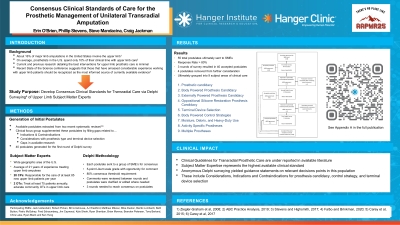
Background and/or Objectives: Major upper limb amputation accounts for approximately 16% of major limb loss affecting an estimated 2.2 million Americans. While clinical practice guidelines have been developed for the holistic care of individuals with upper limb amputation, there has been an absence of detailed guidance for prosthetic management. When published evidence is limited, the highest level of available evidence is collaborative consensus from subject matter experts, with Delphi processes commonly employed. Several such guidelines have been performed and disseminated within the field of prosthetic rehabilitation, but these have not addressed clinical standards for the management of individuals with transradial amputation.
Design: Delphi-based consensus exercise among highly experienced clinician experts.
Participants : Twenty-two high-volume upper limb prosthetists and occupational therapists.
Interventions: Postulates were related to indications, contraindications and considerations associated with prosthesis type (body powered vs externally powered) and terminal device type (hand, hook and activity specific). These were initially extracted from two systematic reviews and supplemented in focus group discussion. These 40 postulates were presented to the Delphi panel to anonymously either confirm or disagree and amend. Rejected postulates were amended by the project directors and reappraised in subsequent rounds of Delphi consensus. Three rounds of panel review were performed.
Main Outcome Measures: Consensus thresholds were established, a priori, at 80%
Results: Following 3 rounds of Delphi consensus review, the panel ultimately endorsed 40 original or amended postulates. These standards cover prosthetic candidacy, indications and considerations for body powered systems, externally powered systems, oppositional silicone restorations, hook-type terminal devices, hand-type terminal devices, considerations between voluntary opening and closing control strategies and the used of activity specific and multiple prostheses
Conclusions: In the previous absence of prescriptive standards for transradial prosthetic care, these now published standards derived from clinical consensus among experienced clinicians provide clinical direction to those caring for individuals with transradial limb loss.

.jpg)