Physician Barrow Neurological Institute Phoenix, Arizona
Disclosure(s):
Jonah K. Rallison, Other: No financial relationships to disclose
Matthias Linke, DO: No financial relationships to disclose
Case Diagnosis: Small intestinal bacterial overgrowth (SIBO) resolves bowel issues with a 56-year-old female with chronic incomplete quadriplegia.
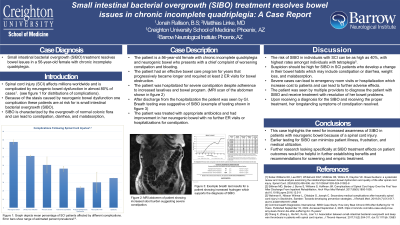
Case Description or Program Description: The patient is a 56-year-old female with chronic incomplete quadriplegia and neurogenic bowel presents with a chief complaint of constipation and bloating. The patient had an effective bowel care program for years that progressively became longer and required at least 2 ER visits for bowel obstruction. The patient was hospitalized for severe constipation despite adherence to increased laxatives and bowel program. After discharge from the hospitalization the patient was seen by GI. Testing returned positive for SIBO. The patient was treated and had improvement in her neurogenic bowel with no further ER or hospitalizations for constipation.
Setting: Outpatient, Inpatient, Emergency, and specialty consultation.
Assessment/Results: Chronic Neurogenic bowel can lead to SIBO, with change in bowel care program that resolves after appropriate treatment for SIBO.
Discussion (relevance): Spinal cord injury (SCI) affects millions worldwide and is complicated by neurogenic bowel dysfunction in almost 80% of cases. Because of the stasis caused by neurogenic bowel dysfunction one complication these patients are at risk for is small intestinal bacterial overgrowth (SIBO). The risk of SIBO in individuals with SCI can be as high as 40%, with highest rates amongst individuals with tetraplegia. Individuals with SIBO develop a change in their bowel program which may include constipation or diarrhea, weight loss, and malabsorption. Severe cases can lead to emergency room visits or hospitalization.
Conclusions: This case highlights the need for increased awareness of SIBO in patients with neurogenic bowel as a result of a spinal cord injury. The patient was seen by multiple providers to diagnose the patient with SIBO and receive treatment with resolution of her bowel problems. Earlier testing for SIBO can minimize patient illness, frustration, and medical utilization.

.jpg)