Medical Director San Mateo Spine Center San Mateo, California
Disclosure(s):
Yung C. Chen, MD: No financial relationships to disclose
Case Diagnosis: To evaluate the therapeutic response, patient satisfaction, duration of pain relief, and treatment frequency of PRF versus PRP in the management of GTPS
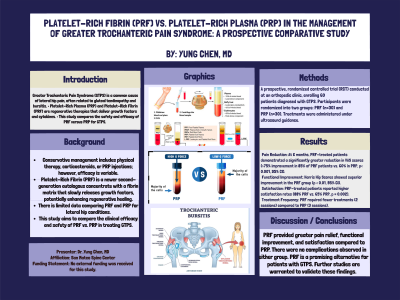
Case Description or Program Description: Greater trochanteric pain syndrome (GTPS) is a common cause of lateral hip pain, often refractory to conservative treatments. Platelet-Rich Plasma (PRP) and Platelet-Rich Fibrin (PRF) are regenerative therapies utilizing autologous blood concentrates to enhance healing and reduce inflammation. PRF, a second-generation platelet concentrate, releases growth factors more gradually than PRP, leading to a prolonged therapeutic effect.
Setting: A randomized controlled trial (RCT) conducted at an orthopedic clinic, enrolling 60 patients diagnosed with GTPS.
Assessment/Results: Pain Reduction: At 6 months, PRF-treated patients demonstrated a significantly greater reduction in VAS scores (>75% improvement in 85% of PRF patients vs. 60% in PRP, p<br> < 0.001, 95% CI). Functional Improvement: Harris Hip Scores showed superior improvement in the PRF group (p < 0.01, 95% CI). Satisfaction: PRF-treated patients reported higher satisfaction rates (88% PRF vs. 65% PRP, p = 0.002). Safety: No severe adverse events were reported. Mild post-injection pain was more frequent in PRP patients vs. minimal discomfort in PRF patients, likely due to the acidic citrate anticoagulant used in PRP preparation, which may lower pH and cause transient inflammatory responses. Time Efficiency: The total duration of treatment in the PRF group was 50% less than in the PRP group due to a shorter centrifugation time for PRF preparation
Discussion (relevance): This study highlights PRF’s advantages over PRP, including sustained therapeutic effects, greater patient satisfaction, and reduced treatment frequency. Consequently, PRF may provide a more tolerable experience for patients while maintaining superior clinical outcomes.
Conclusions: PRF demonstrated superior pain relief, functional improvement, and patient satisfaction compared to PRP for GTPS, with longer-lasting benefits and fewer required treatments. PRF’s gradual release of growth factors may account for its prolonged efficacy.

.jpg)