






Physician Childrens National Medical Center Washington, District of Columbia

Disclosure(s):
Paul George Abboud, MD: No financial relationships to disclose
Case Diagnosis: A pediatric patient with ALERD due to bacterial meningitis with full and rapid recovery.
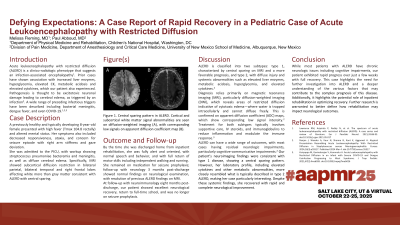
Case Description or Program Description: A healthy 8-year-old female was admitted to the PICU with fever, altered mental status, and seizures. Workup revealed strep pneumoniae bacteremia and meningitis, as well as diffuse cerebral edema. MRI showed subcortical diffusion restriction in right frontal and bilateral parietal and temporal lobes affecting white more than gray matter consistent with Acute Leukoencephalopathy with Restricted Diffusion (ALERD) with central sparing.
Setting: Inpatient Hospitalization
Assessment/Results: ALERD is a clinicoradiologic phenotype that suggests an infection-associated encephalopathy. This can be associated with increased liver enzymes, hyperglycemia, elevated CK, metabolic acidosis and elevated cytokines, which our patient also experienced. Pathogenesis is thought to be excitotoxic neuronal damage leading to cerebral edema. A wide range of preceding infectious triggers have been described including bacterial meningitis, dengue fever, and even COVID-19.
Discussion (relevance): ALERD can have a wide range of outcomes, with most cases having residual neurologic impairments, particularly cognitive impairments. Review of literature suggests that patients with sparing of the central region of the brain on imaging tend to have a milder course and better outcomes. That was the case here, as our patient had a fairly rapid recovery over just a few weeks after treatment with antimicrobials and steroids. By discharge, she regained normal cognition, behavior, and motor skills including independent walking and running. She remained on medication for seizure prophylaxis and will follow up with Neurology with plan for repeat Brain MRI and EEG testing in 3-6 months.
Conclusions: While most patients with ALERD have chronic neurologic issues including cognitive impairments, our patient exhibited rapid progress over just a few weeks with full recovery. This case highlights the need for further investigation into ALERD and a deeper understanding of the various factors that may contribute to the complex prognosis of this disease.