Medical Student Howard University College of Medicine Washington, Maryland
Disclosure(s):
Jeffrey Palmer, Other, II: No financial relationships to disclose
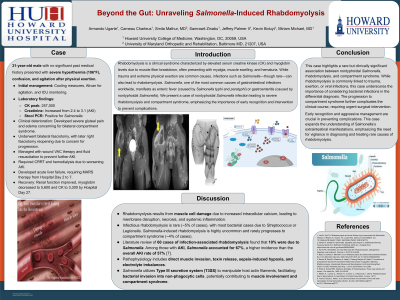
Case Diagnosis: Rhabdomyolysis associated with Salmonella infection: A Case Report
Case Description or Program Description: This case presents a 21-year-old male with rhabdomyolysis likely caused by an ongoing Salmonella infection. He initially presented to the emergency department (ED) with severe hyperthermia following extraneous physical activity. His CPK levels and other labs demonstrated evidence of rhabdomyolysis and acute kidney injury. His stool PCR was also positive for Salmonella. His clinical condition worsened with findings concerning bilateral compartment syndrome, so he underwent bilateral gluteal fasciotomy.
Setting: Emergency Department and ICU
Assessment/Results: The combination of Salmonella infection, hyperthermia, and exercise-induced muscle stress likely contributed to the severity of muscle damage in this patient. Salmonella infections primarily affect the gastrointestinal system, but extraintestinal complications such as myositis and rhabdomyolysis have been documented.
Discussion (relevance): There are limited case reports of a Salmonella infection causing rhabdomyolysis and progressing to compartment syndrome. This case highlights the importance of expanding the causes of rhabdomyolysis beyond its typical causes, such as crush injury and strenuous exercise. A systemic approach leads to a more favorable outcome and prevents further progression or complications of rhabdomyolysis.
Conclusions: This case highlights a rare but clinically significant association between nontyphoidal Salmonella, rhabdomyolysis, and compartment syndrome. While rhabdomyolysis is commonly linked to trauma, exertion, or viral infections, this patient’s presentation underscores the importance of considering bacterial infections in the differential diagnosis. The progression to compartment syndrome further complicates the clinical course, requiring urgent surgical intervention. Early recognition and aggressive management are critical in preventing severe complications, particularly in cases where an atypical infectious trigger is suspected. This case expands the understanding of Salmonella’s extraintestinal manifestations, emphasizing the need for vigilance in identifying and managing rare presentations of rhabdomyolysis.

.jpg)